From Resident Evil: Outbreak Night fan shorts to a 30-second AI suspense film
Build an AI suspense short with one location, one disturbance, and three shots. Includes an original ferry storyboard, adaptable prompts, and continuity, sound, and editing checks.
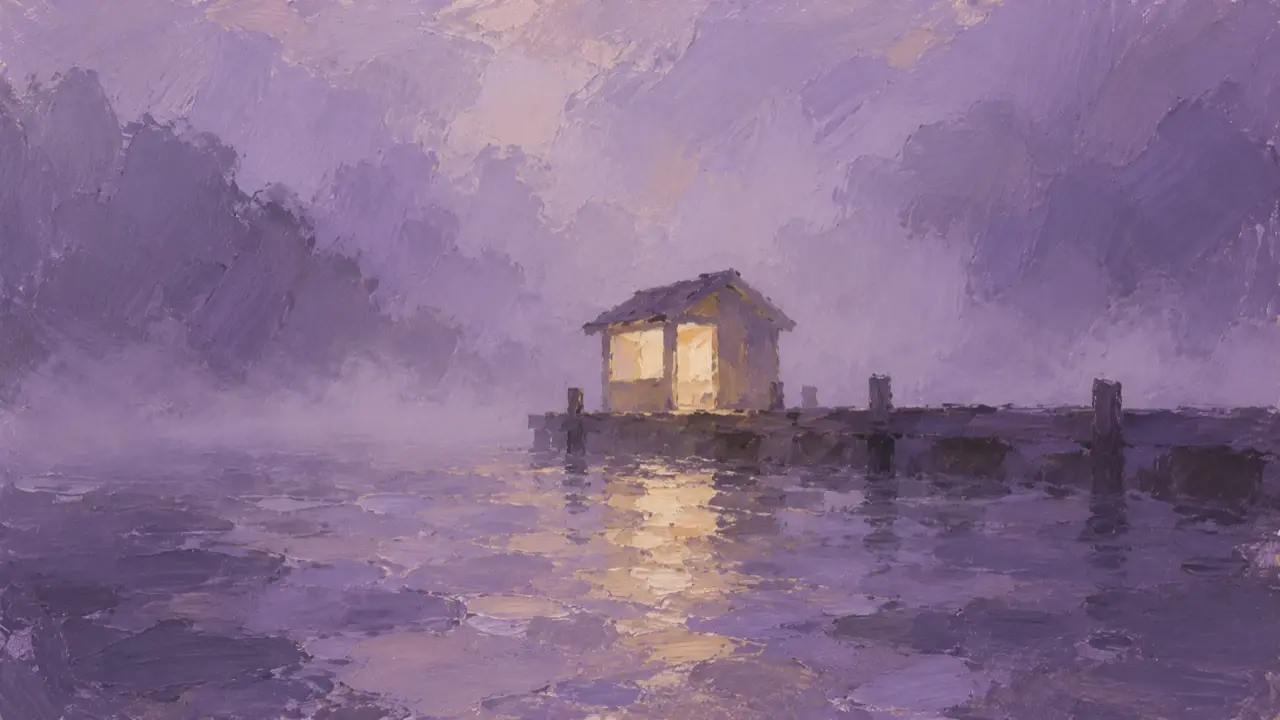
AI fan shorts inspired by Resident Evil: Outbreak Night offer a concrete starting point for making a cinematic short of your own. Start with 30 seconds, one location, and one unexpected event: establish what should be happening, disrupt it, then stop where viewers will want to know more.
The original story below, The Last Ferry, shows how. It keeps the suspense-building approach while using new characters, a new location, and a new plot. Adapt the references and prompts, generate three clips, then edit them into a short story.
Write a one-sentence mystery you can film
The last ferry has left. The attendant has just locked the empty waiting room when a boarding bell rings inside.
That gives viewers three essential facts: no one should still be there, the door is locked, and that sound should not be happening. A contradiction the audience can grasp immediately works better for a short than filling the opening with ruins, monsters, and explosions.
Prepare two reference images first: one showing the character’s appearance and one showing the waiting room and pier. Keep the attendant’s short black hair, orange knit beanie, and blue raincoat consistent. Fix the setting as a wooden pier at dusk after rain, with a dark teal frosted-glass door and warm yellow light. Reuse those references across shots instead of generating a new character each time.
Three shots, each revealing a little more
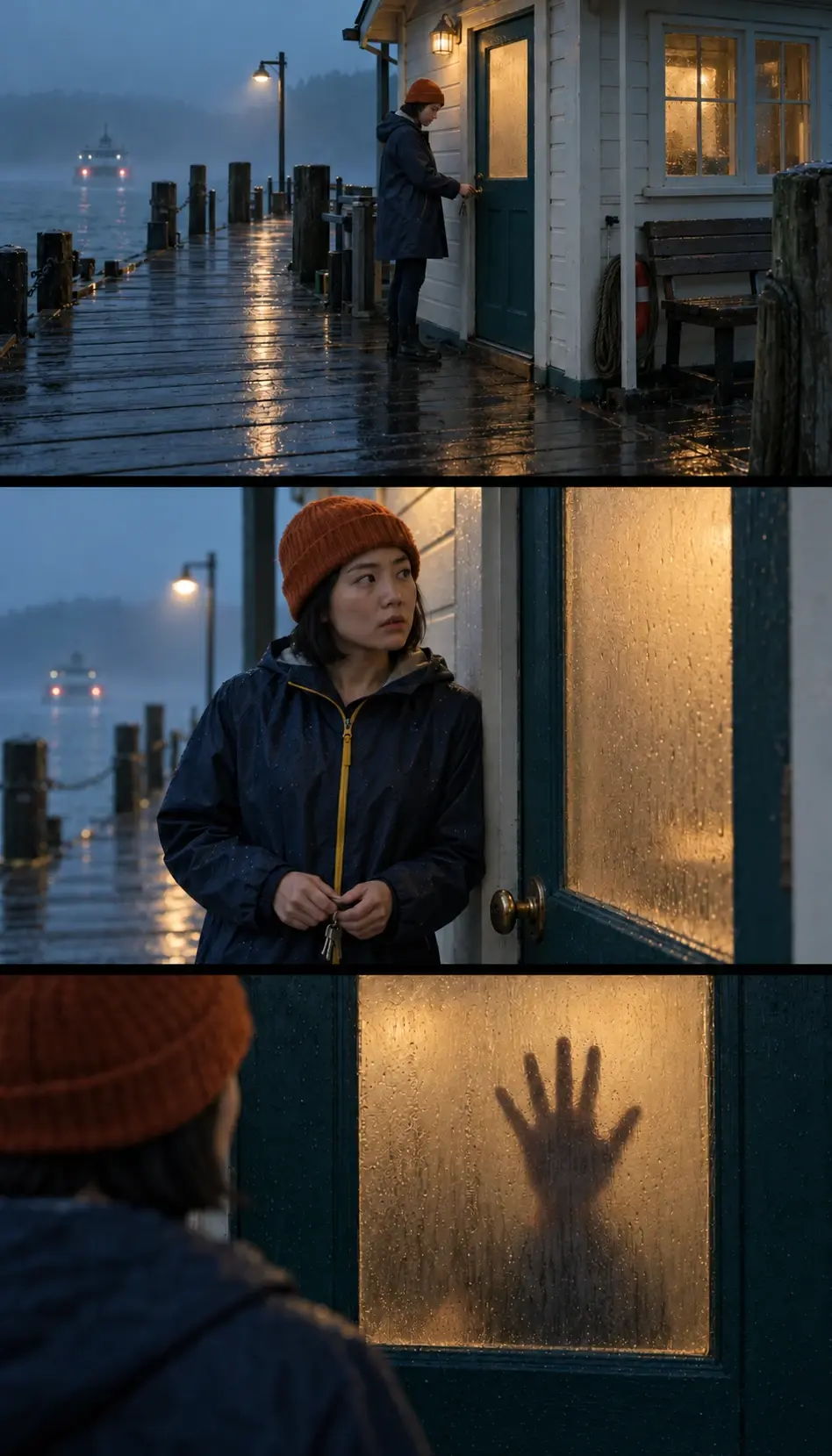
From top to bottom: establish the setting, hear the disturbance, reveal a clue. The framing gets closer with each shot, but the full threat stays unseen.
| Shot | Planned length | What the audience needs to understand | Sound |
|---|---|---|---|
| 1: Locking up | 10 seconds | The ferry has left, and the attendant is finishing work | Water, a distant engine, and a light jingle of keys |
| 2: Stopping | 10 seconds | A boarding bell rings in the empty room | The bell comes first; then she turns |
| 3: The glass | 10 seconds | Something seems to remain behind the door, but it is unclear | The engine fades, leaving breathing and a soft sound against glass |
Shot 1: Establish what should be normal
Using the character and location references, generate a landscape opening shot for a suspense short, approximately 10 seconds long. An empty wooden pier at dusk after rain; the last ferry slowly leaves in the distance. A female attendant in a blue raincoat and orange knit beanie stands outside the waiting room, removes her key from the dark teal door lock, and checks that the door is locked. Use a static wide shot that shows both the attendant and the departing ferry. Soft reflections appear on the wooden boards, and warm yellow light stays on inside the waiting room. Keep her appearance consistent with the reference. Add no passersby, monsters, or text. Sound: water, a distant engine, and the soft jingle of keys.
The key is to make the locking action easy to understand. If inserting, turning, and removing the key becomes muddled, simplify it: show her remove the key, then tug once on the door handle.
Shot 2: Let the sound come before the reaction
Continue with the same character, clothing, pier, and lighting from the previous shot. Generate an approximately 10-second medium close-up. The female attendant is still outside the waiting room, holding her keys at waist level. During the first two seconds, she prepares to leave. Two clear boarding-bell chimes suddenly ring from inside the closed waiting room. She stops, slowly turns toward the frosted-glass door, shifts from relaxed to alert, and finally holds still. Move the camera in only slightly; do not take it inside. Keep the door closed, with no figure visible behind the glass yet. Retain the water sounds. Make the bell distinct but not harsh. Add no dialogue, subtitles, or background music.
Putting the bell before the turn makes the audience search for its cause alongside the character. If sound and movement do not align, shift the bell during editing; one sound effect does not require remaking the entire clip.
Shot 3: Reveal one clue, then stop
Continue with the same character and setting. Generate an approximately 10-second over-the-shoulder close-up. Position the camera behind the female attendant, showing only her orange beanie and blue raincoat shoulder in the left foreground. The frosted-glass door fills most of the frame. Nothing moves behind the glass for the first four seconds. Then a human hand with five naturally spread fingers slowly presses against the glass from inside, forming a blurred silhouette and condensation marks. The attendant stays outside and does not reach toward the glass. Hold for two seconds, then end. The door stays closed throughout. Do not show the hand’s owner’s face, blood, monsters, or anything suddenly jumping into view. Keep the cool blue ambient light and warm interior light consistent. Use only faint breathing and a muffled sound as the hand touches the glass.
Do not immediately explain who is inside. Someone is in a room that should already be empty—that is enough to end this scene.
Edit the three clips together with continuity in mind
Get the first shot right, then use the confirmed character and location references for the next two. Where the creation tool supports reference images or a starting frame, use the same character reference, location reference, or a suitable still from the preceding shot. Repeating “the same person” in text alone is not enough.
Focus on four checks while editing:
- Has the character changed? The beanie, hairstyle, raincoat color, and keys should match across shots.
- Has the space changed? The attendant stays outside; the hand appears inside. The door handle and divisions in the glass must not switch sides.
- Does sound guide attention? The bell leads into the turn, and the soft sound against glass leads into the hand. There is no need to fill every second with scare effects.
- Does a clip repeat information? Shot 1 already establishes that the pier is empty. Move the later shots toward the disturbance and trim unnecessary walking or waiting.
Thirty seconds is an editing target; generated clips do not all have to last exactly ten seconds. Keep the clearest action from each. A sequence that flows matters more than hitting a duration mechanically.
Turn the structure into your own story
Keep the idea that something already finished happens again, and change the setting: your own voice comes from a radio station whose power is off; a book turns its pages inside a closed secondhand bookstore. Choose just one disturbance each time, then build the sound, character reaction, and final clue around it.
To develop a one-sentence premise into a script, storyboard, and video clips, try PagePop Short Drama Director. Send the story and reference images first, confirm the characters and storyboard, then work through the clips one at a time.