Victoria’s Secret 2026: Create your own angel-wing runway look
Turn a full-body photo into a runway image with a champagne-gold gown and giant organza wings, then plan a three-shot walk. Includes a finished example, two prompts, and detail checks.
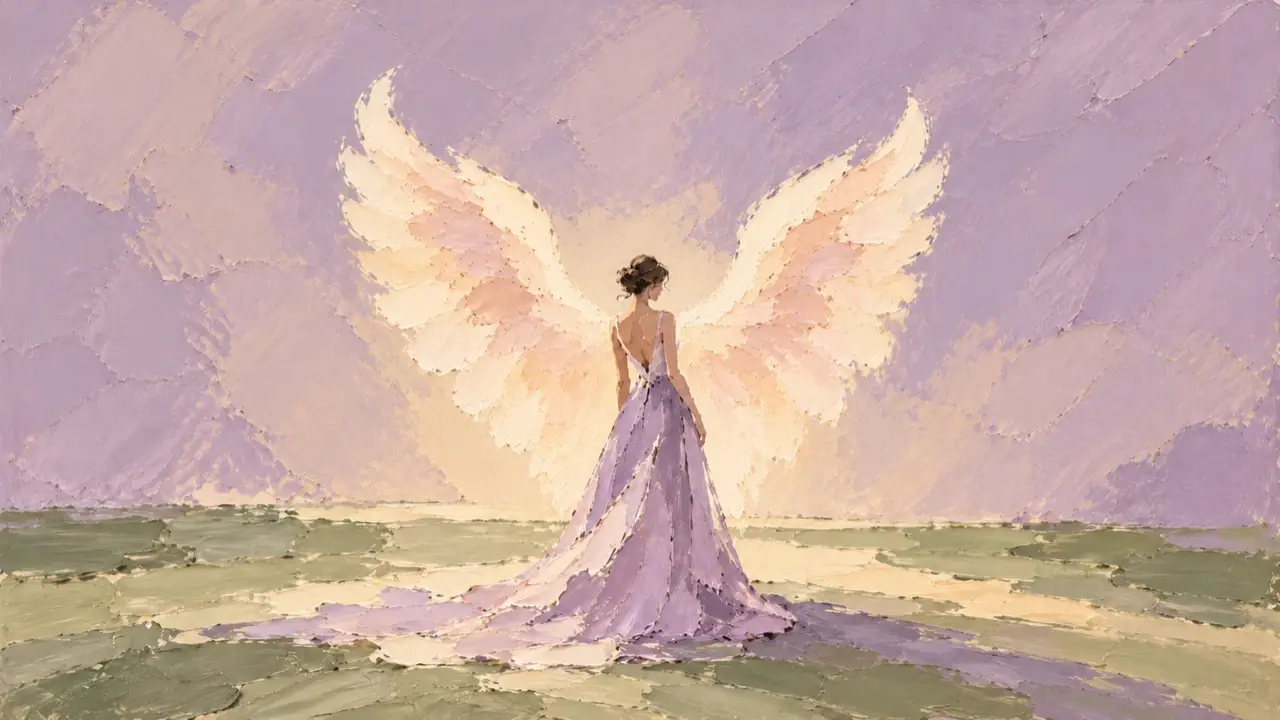
The 2026 Victoria’s Secret Fashion Show took the stage in Los Angeles, opening on the morning of October 19 in Beijing time. To bring that runway atmosphere into your own photos, start with an angel-wing look: settle on the person and outfit, then add wings and lighting, and finally develop the finished image into a short runway video.
This finished example combines a champagne-gold gown, giant organza wings, and purple stage lighting. The aim is to keep the wing surfaces translucent and their edges flowing, while making the wings, clothing, and body belong in the same space.
Start with a clear full-body photo
A visible face, naturally lowered hands, and shoes fully in frame make it easier to check whether the person’s appearance has changed. Leave room on both sides of the shoulders, too, so the finished wings don’t get cut in half.
You don’t need to wear an elaborate gown first. A plain top and pants clearly show body shape, stance, and arm positions. Bags, shawls, or anything that obscures much of the body make the shoulder and back relationships harder to judge.
Make the organza wings part of the outfit
Champagne gold leads this look, with purple kept in the distant stage lights. Embroidery and the drape of the gown define the silhouette, while translucent organza and shifting highlights give the giant wings volume. A dark background keeps the person and wings in focus.
These wings are made from organza: the upper edges arch high on both sides, and the lower edges fall in smooth curves. Fine supports hold the shape, while the fabric retains folds and translucency. The wing bases sit behind the shoulder blades, while the shoulders and arms remain in front of the wings. That makes them read as a wearable stage costume. Light the golden edges from behind and to the side, with soft fill on the face rather than turning the entire face gold.
Give the image assistant your photo and this brief:
Keep the reference person’s face, hairstyle, skin tone, and natural body proportions. Change the outfit to a champagne-gold embroidered floor-length gown with a round neckline, sheer long sleeves, and an opaque satin skirt. Add a pair of giant gilded organza wings behind the shoulder blades: high arched upper edges, lower edges falling in smooth curves, and lightweight fabric with folds, translucency, and fine supports. Do not use feathers. Keep the full body, hem, and both wings completely in frame, with the shoulders and arms in front of the wing surfaces. Use a dark runway with soft purple lighting in the distance, gentle fill light on the face, golden rim lighting on the organza, and natural shadows and reflections beneath the feet. Add no text or logos.
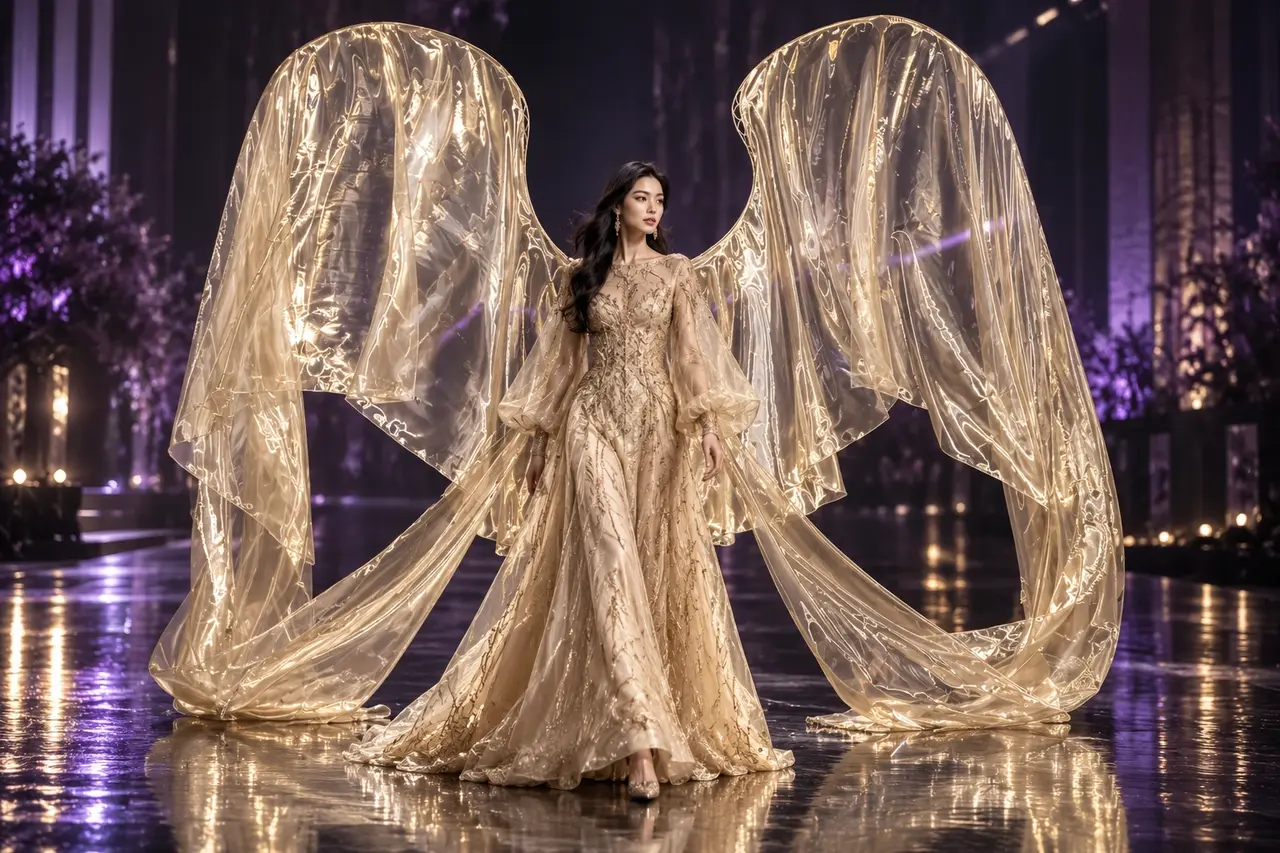
For another look, change one variable at a time. Keep the clothing and light positions but switch the gold organza to pearl white, for example. Or keep the wings and change only the gown’s silhouette. Changing everything at once makes problems harder to trace.
Develop the image into a three-shot runway sequence
Approve the still look first, then use that same finished image to plan the video. Break up the movement so each clip does one thing. It’s easier to check continuity than when asking for walking, wing spreading, and spinning all at once.
| Shot | Action and framing | What to preserve |
|---|---|---|
| Walk in | Full-body front view, slowly taking two steps toward the camera | Feet planted on the floor; wing tips stay in frame |
| Hold | Stand still while the organza edges sway gently | The same face, clothing, and wing structure |
| Turn | Slowly turn about 45° in place, ending in a front three-quarter pose; the camera stays fixed | Wing bases follow the shoulders and back; wings don’t pass through the body |
You can describe the video like this:
Use this outfit image to keep the same person, champagne-gold gown, giant gilded organza wings, and light positions. Prepare three runway shots, about 3 seconds each. In the first, show the full body slowly taking two steps toward the camera. In the second, hold the pose with a gentle sway at the organza edges. In the third, slowly turn about 45° in place and stop in a front three-quarter pose. Keep the camera fixed, the hem and foot movement natural, and the wing bases moving with the shoulders and back. No sudden changes of face or outfit, and no extra wings. Leave enough room in the frame for the turn.
Check the face and hands first, then the upper back and feet. If the face changes, request a correction to identity consistency only. If the wings look pasted on, specify the overlap and wing-base placement. If the person floats while walking, shorten the stride and clarify foot contact and shadows. Don’t bundle these issues into a vague request to “make it more polished.”
To make your own version, bring a full-body photo and the outfit brief above to PagePop. First create an image you’re happy with, then break the movement into a video brief. Keep yourself recognizable, and the wings and runway have their lead.